Why Student Voices Matter More Than Ever in the AI Era
If we are serious about not only preparing learners for the age of artificial intelligence but also supporting their current use of AI, we have to start by listening to the people who are already living in it.
During our recent webinar, Creation in the AI Era, one message came through loud and clear. Students are not waiting for adults to figure out AI. They are already navigating it, questioning it, and shaping how it shows up in their creative lives.
As one student put it simply, “AI is kind of everywhere.”
That statement alone frames the conversation.
Students Are Not New to This Conversation
For students, AI is not a future trend or an abstract policy conversation. It is embedded in the platforms they use, the content they consume, and the work they create. Images, videos, music, and writing can now be “created by any and everybody and be shared” almost instantly.
That speed changes everything.
Students talked about how quickly content can move from idea to publication, sometimes “in minutes, if not seconds.”While that access can be empowering, it also raises new questions about effort, originality, and intent. When creation is easy, thinking becomes the real work.

Introduction to AI
Teaching Resource
Use this free lesson, Introduction to AI lesson, from The Achievery to help students understand what AI is, how it is trained, and how it shows up in everyday life. This lesson supports digital literacy and responsible decision-making.
Original Thought Did Not Disappear. It Got More Important.
One of the strongest themes students returned to was the idea that generative AI does not replace creativity. It exposes it.
Students described AI as a tool that can help get started, spark ideas, or polish work, but not something that can replace perspective. What makes their work meaningful is not the output. It is the choices behind it. Several students noted that when AI does too much of the thinking, they feel disconnected from their work. One student captured this perfectly, saying, “AI can help you start, but if it does all the thinking for you, it doesn’t really feel like your work anymore.”
These insights land squarely in the heart of learner-centered education. Students want agency. They want ownership. They want tools that support creativity, not shortcuts that remove meaning from the process. For schools, this is a reminder that how AI is used in instruction matters just as much as whether it is allowed.
That insight matters for educators. Engagement is not about banning tools. It is about helping students understand when AI supports learning and when it does all the work.
Deepfakes Changed How Students Think About Trust
When the conversation turned to deepfakes, the tone shifted. Students were thoughtful and honest about how manipulated content has changed their relationship with media.
They shared that seeing convincing fake videos and images has made them more skeptical. Trust is no longer assumed. Verification is now a habit. One student reflected on how “the prevalence has increased,” forcing them to slow down, question sources, and double-check what they see before believing or sharing it.
This is a critical insight for schools. Media literacy in the AI era is not just about spotting fake content. It is about teaching students how to pause, evaluate, and ask better questions in a world where reality can be edited.

How Deepfakes Work
Teaching Resource
Use this lesson “How to Spot a Deepfake”, to walk students through identifying manipulated images, verifying sources, and understanding why deepfakes are becoming harder to detect.
Ethics Feels Personal to Students
When students discussed ethics, they did not ask for tighter restrictions. They asked for clarity and understanding. One student summed it up simply. “We don’t want more rules. We want to understand what’s expected and why.”
That statement carries so much weight. Ethical AI use is not something students learn through fear or punishment. It is something they develop through conversation, modeling, and trust. This is where schools have an opportunity to move beyond compliance and toward shared responsibility.
The students expressed that they want clarity on expectations, but also trust. They understand that AI use exists on a spectrum and that ethical decision-making depends on context, purpose, and transparency. What they asked for was not more punishment, but better guidance.
That perspective challenges schools to move beyond simple yes-or-no policies and toward conversations that build judgment, agency, and accountability.
Ethics, Harm, and Responsibility in the AI Era
Teaching Resource
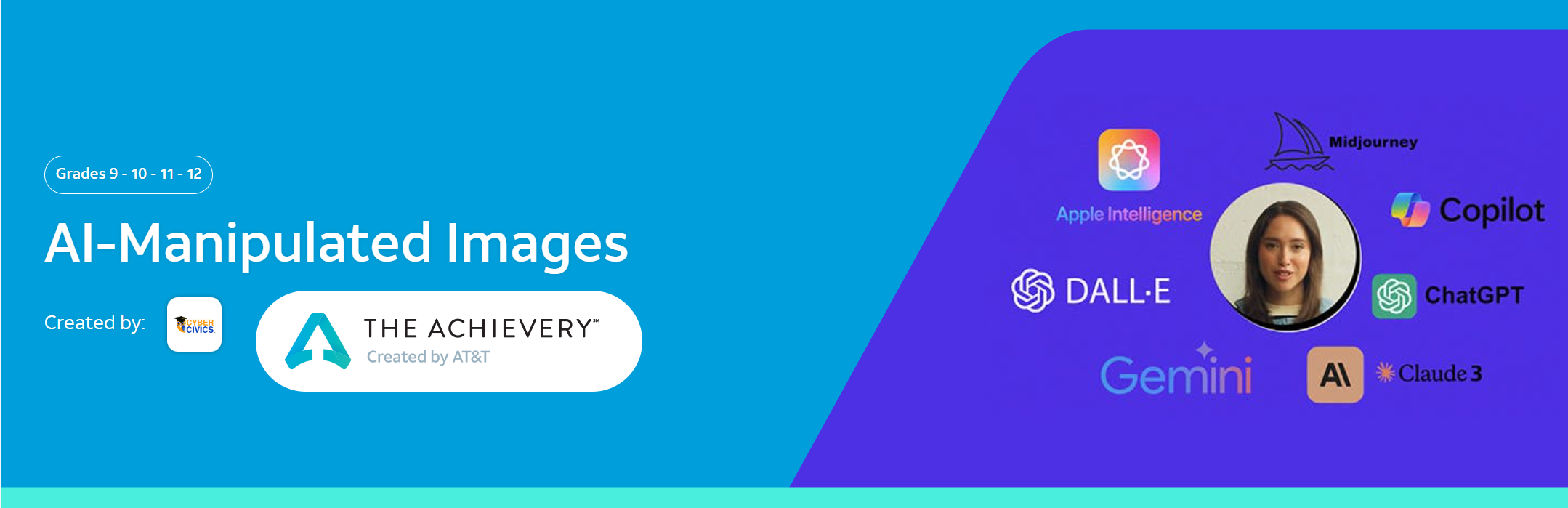
Resources like It’s Real to Me and AI-Manipulated Images & You from The Achievery help students explore the real emotional, social, and legal consequences of AI misuse, including intimate deepfakes. These lessons support empathy, digital citizenship, and responsible decision-making while giving students clear guidance on what to do if harm occurs.
What Schools Should Take From This
Students are already forming their own frameworks for creativity, trust, and ethics in the AI era. The question is whether schools will help shape those frameworks or ignore them.
This webinar reminded us that students are not passive consumers of AI. They are creators, critics, and decision-makers. When we elevate their voices, we gain insight we cannot get from policy documents or tool reviews alone. If we want AI to enhance learning rather than diminish it, we have to design with students, not just for them.
Free, high-quality resources like The Achievery from AT&T make it easier for schools, families, and communities to move from conversation to action.
In an era increasingly shaped by machines, the most human thing we can do is listen and then give students the tools they need to create responsibly, think critically, and lead confidently in the AI era.

“Free, high-quality resources like The Achievery from AT&T make it easier for schools, families, and communities to move from conversation to action. With AI related lessons (link to The Achievery | All Units) from expert education organizations including aiEDU, Media Smarts, Cyber Civics and more, students can strengthen their AI knowledge and literacy through engaging and entertaining videos and activities.”
