
The Conversations District Tech Directors Need to Be LEADING Right Now
In communities across the country, two of the biggest conversations of this moment are happening around artificial intelligence (AI) and screen time. Discussions are converging fast and getting conflated almost as quickly. Yet, as districts do their instructional planning, the issues remain siloed. I contend that if we’re serious about preparing students for the future they’re walking into, technology directors need to draw out how these conversations actually connect, and how decisions about one inevitably shape the other. Leadership from technology directors is imperative – to navigate this moment.
This could not have been clearer at the 2026 CoSN Conference, where I had the privilege to moderate a panel with some of the nation’s leading technology directors who are navigating these challenges in real time. The conversation made one thing very clear…These are not future questions. They are present-day leadership challenges.
Districts are already facing community concerns, policy pressure, classroom implications, data privacy questions, cybersecurity risks, and equity gaps. The question is not whether schools will engage with AI. The question is whether we will engage with it thoughtfully and transparently, with our students at the center.

The panel included district technology leaders who are doing this work right now: Phil Hintz from Niles Township High School District 219 (IL), Charles Franklin from Cypress-Fairbanks ISD (TX), Suzan Brandt from Mountain Brook Schools (AL), and Shad McGaha from Belton ISD (TX).
My takeaways?
The discussion surfaced six key strategies every district should be considering when integrating new AI programming into their schools and classrooms, and technology directors should be leading these discussions with their leadership teams.
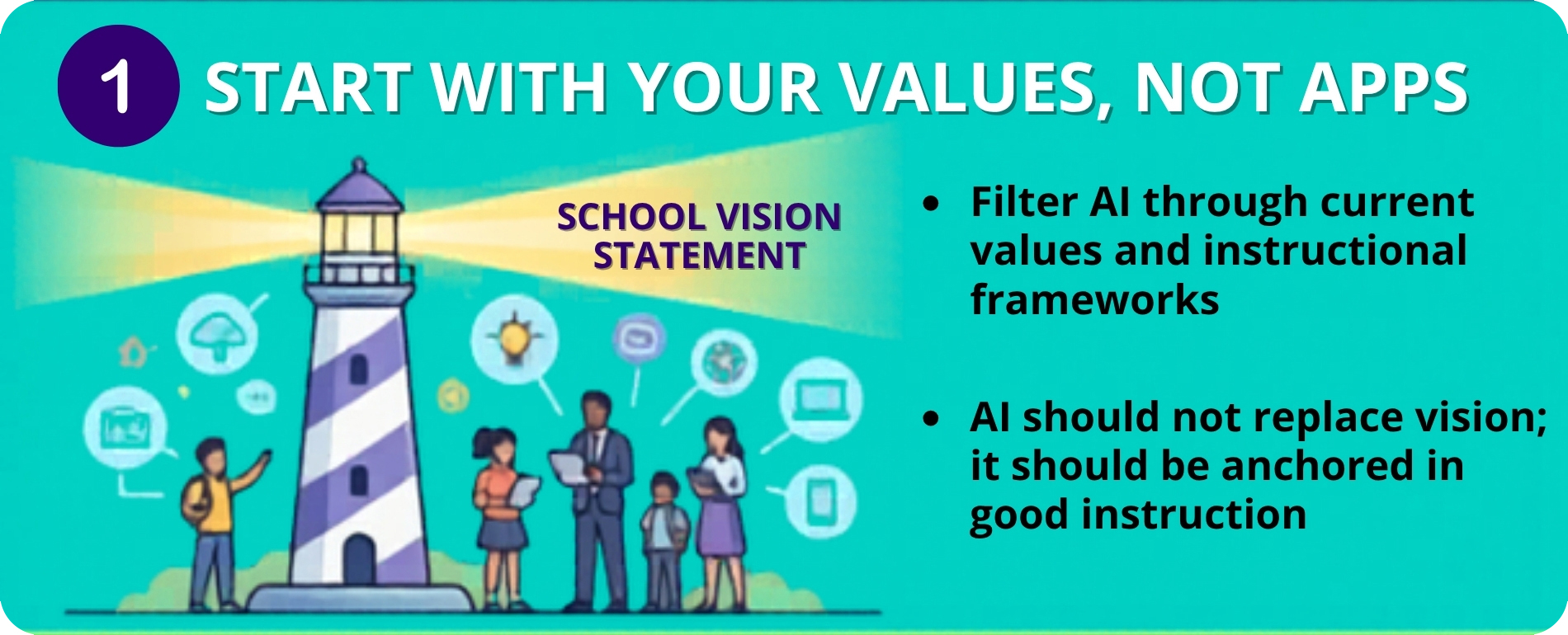
1. Start with Your Values and Vision, Not Apps
AI should be filtered through what districts already believe about good instruction. That is the move. AI should not replace your vision. Instead, it should help you live it more fully.
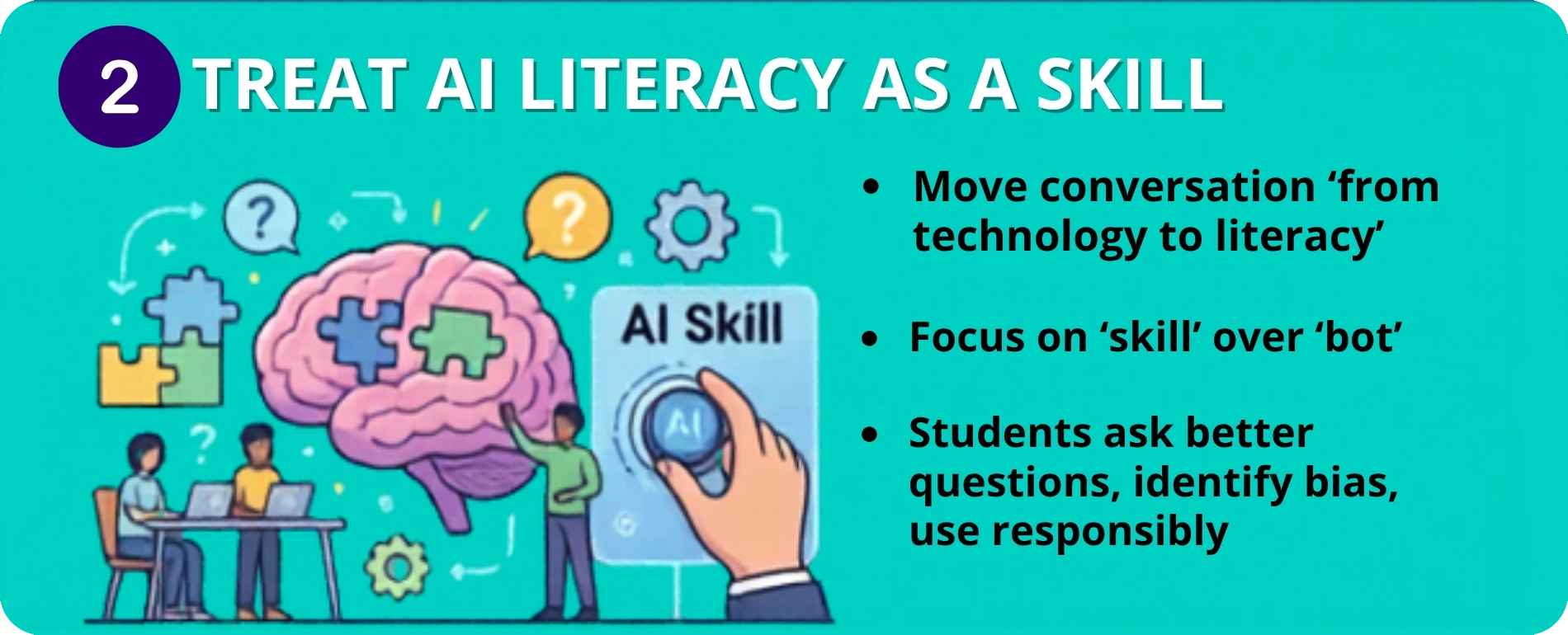
2. Treat AI Literacy as a Skill
AI literacy is not about chasing the latest bot. It is about helping students and staff ask better questions, evaluate outputs, identify bias, and use emerging technologies responsibly. The most important shift districts can make is moving the conversation from “What tool are we using?” to “What skills are we building?”
The Achievery’s Future of Work lesson helps students explore how AI is changing careers while focusing on the human skills students will need most, including critical thinking, creativity, empathy, curiosity, humility, and emotional intelligence. It is a practical way to move AI literacy from a technology conversation to a future-ready skills conversation, and it is one of several AI lessons on The Achievery built to support teachers and students.
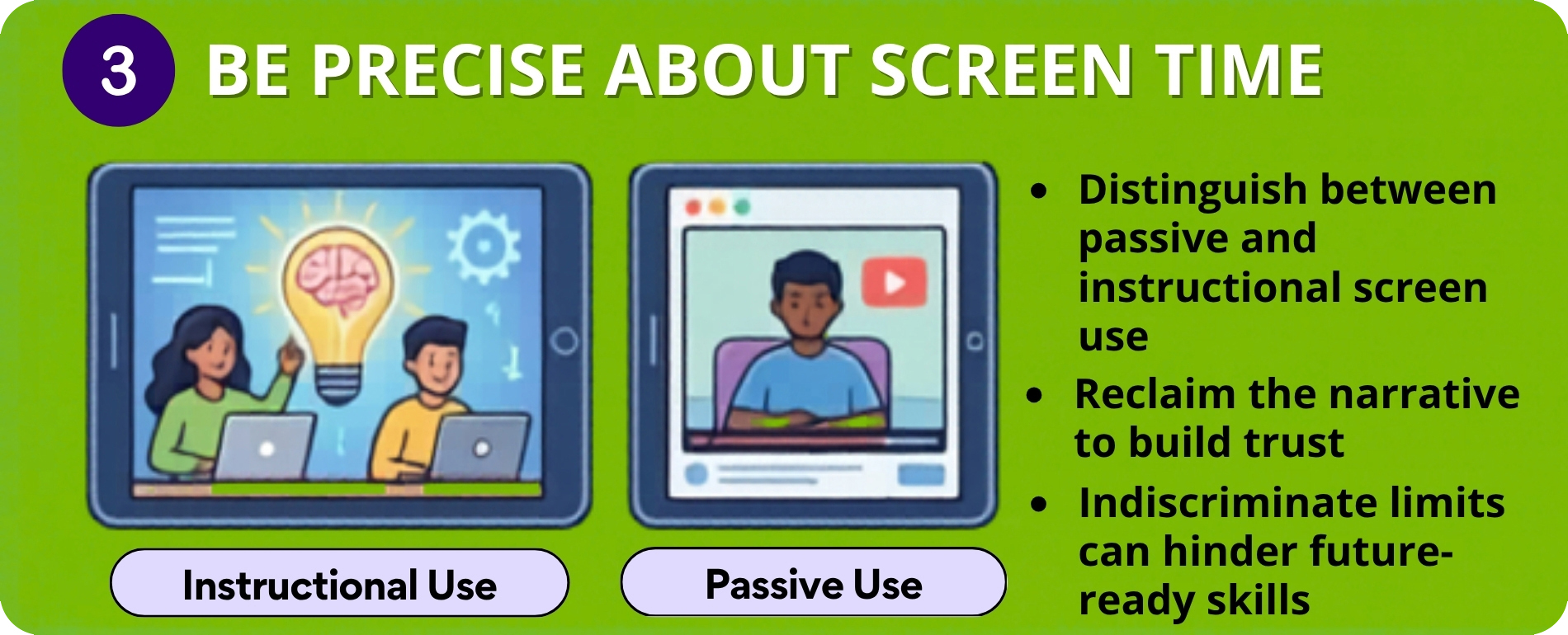
3. Be Precise About Screen Time
Not all screen time is the same. Districts need to clearly distinguish between passive screen use and instructional screen use. When technology is being used to create, collaborate, problem-solve, and build future-ready skills, leaders must help families understand the purpose behind the screen.

AT&T ScreenReady® hub helps families navigate devices, apps, social media, gaming, and healthy digital habits at home, making it a strong companion resource for districts connecting AI and screen time conversations with families.
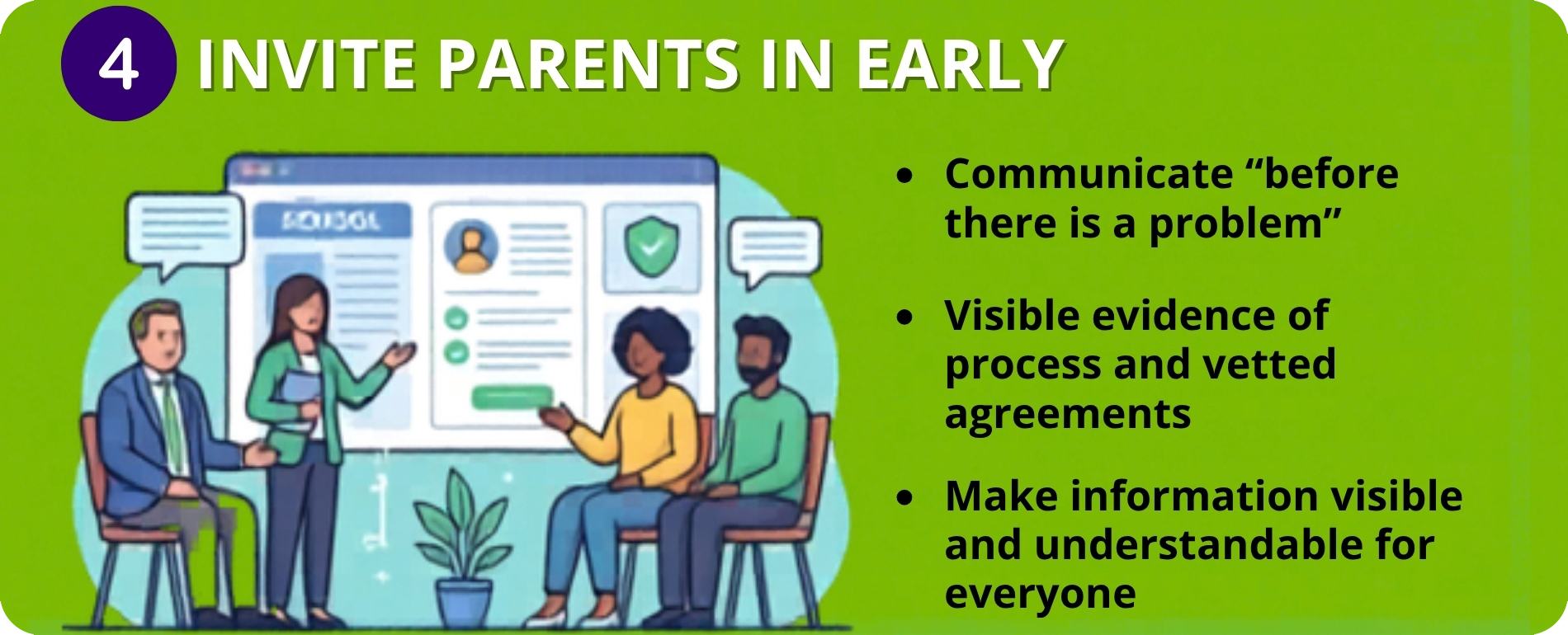
4. Invite Parents into the Conversation Early and Proactively
Parents should not hear about AI, screen time, or digital tools only after a concern arises. Districts build trust when they communicate early, make their process visible, and help families understand what tools are being used and why, how they are reviewed, and how student data is protected.
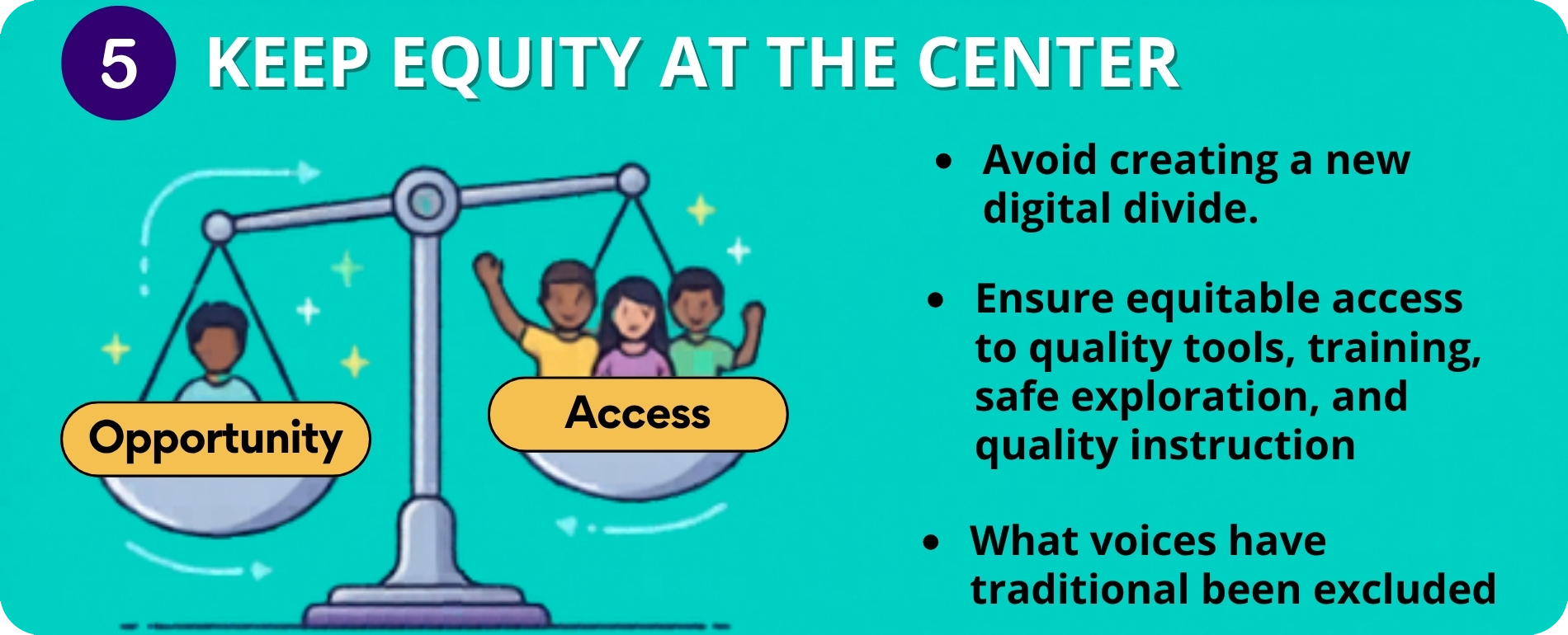
5. Keep Equity at the Center
AI and equity cannot be treated as separate conversations. Access now means more than devices and internet connectivity. It also means access to quality tools, thoughtful instruction, safe opportunities to explore, and the skills students need to use AI as creators, collaborators, and critical thinkers.
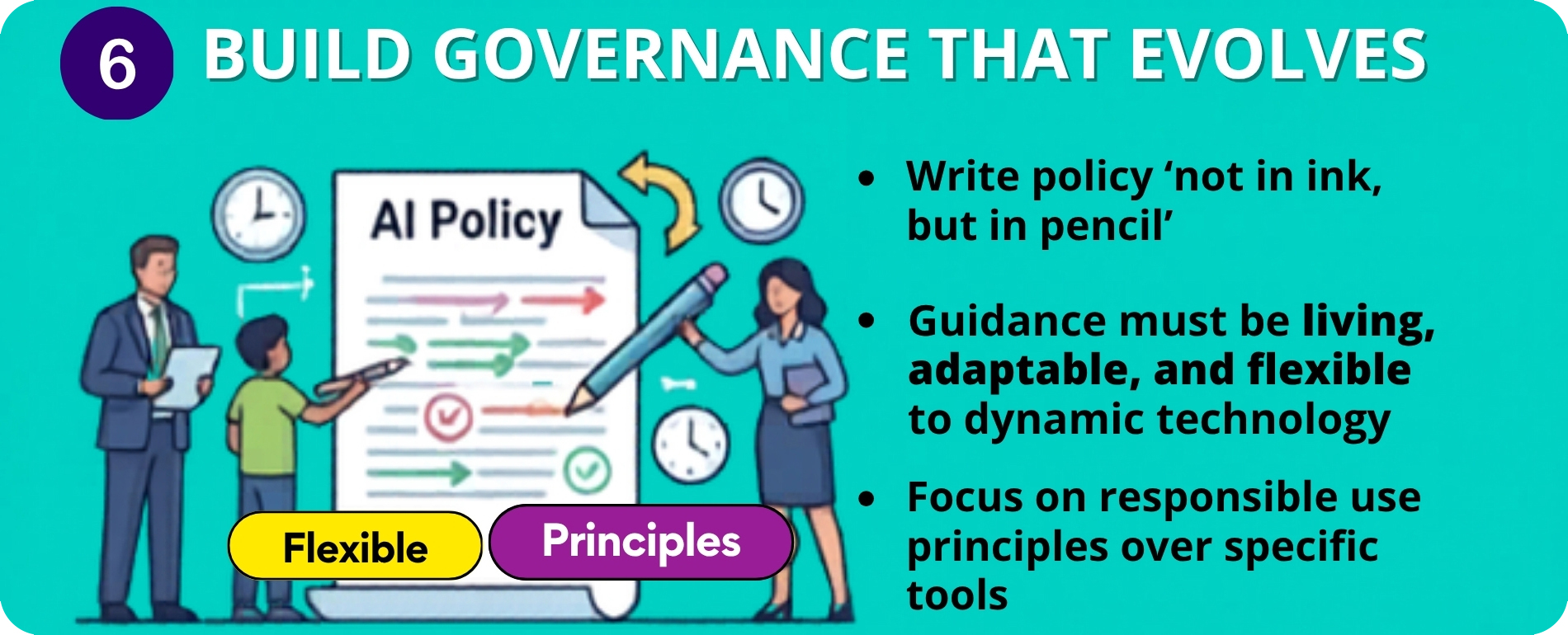
6. Build Governance that Evolves
AI guidance has to be living, adaptable, and grounded in principles. Districts need policies written “not in ink, but in pencil” because technology is advancing faster than traditional policy cycles. That governance also has to account for vendor transparency, cybersecurity, data privacy, and the way AI is changing district operations behind the scenes.
My Final Thoughts…
AI is not waiting for school systems to get comfortable. Screen time debates are not going away. Communities are asking hard questions. Legislators are stepping in. Students are already using the tools. Teachers are already navigating the tension. The only real choice districts have is whether they will lead the conversation or be dragged by it. District Technology Directors are poised to lead this conversation to ensure we enhance student learning through the thoughtful, intentional, and authentic uses of AI in our classrooms.
Join The Achievery!

Before you begin, be sure to sign up for a FREE Achievery account! The Achievery is a free and safe online learning platform created by AT&T to provide K-12 students with engaging and entertaining videos paired with educational activities.
Want a quick-reference version of the six strategies? Download the infographic and share it with your leadership team, your board, or anyone else in the AI conversation at your district.
