Our Legacy Is in Today’s Classrooms, And It Must Be Protected
I am living history.
I grew up in Buffalo, New York, the daughter of an immigrant, a child who received free school lunches, in a family that, at times, relied on the social safety net to make ends meet. I was a Black girl in America’s public schools, and those schools and the systems built to support students like me changed the trajectory of my life.
I am a teacher first and always. I became one of the youngest principals in my town. And now I get to serve as an advocate, working every day to ensure that the systems that lifted me are available to every child who comes after me.
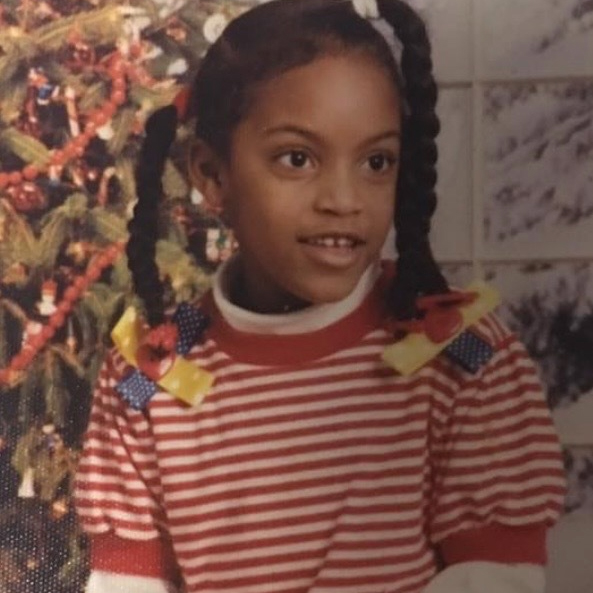
This Black History Month, I am thinking about legacy. Not only the legacy of those who marched, who organized, who bled and built, but the legacy sitting in classrooms right now. The Black boy in the third row who hasn’t yet been told he’s brilliant. The Black girl who doesn’t know that a college and career counselor could open every door she’s imagined. Our legacy is not only in history books. It is alive, breathing, learning, and dreaming in schools across this country. And it is our collective responsibility to protect it.
A Legacy Built by Systems That Worked
The Black leaders who inspire us today, the policymakers, educators, scientists, and artists who have shaped our culture and our country, did not get there alone. Many are products of the very federal investments now under threat.
Oprah Winfrey found her early footing through Upward Bound. Viola Davis took her first acting classes through that same program at Rhode Island College. Congresswoman Gwen Moore, the first Black person elected to Congress from Wisconsin, was recruited into the first Student Support Services cohort, a TRIO program, and is now the Co-Chair of the Congressional TRIO Caucus. Cheryl L. Johnson, who served as the 36th Clerk of the U.S. House of Representatives, and Dr. Lesia Crumpton-Young, the first African American woman to earn a Ph.D. from Texas A&M’s College of Engineering, are both TRIO Upward Bound alumnae. These are not exceptional outliers. They are proof of what happens when public systems are funded.
Programs that support students are never charity. They are an investment; a recognition that talent is everywhere, but opportunity is not. For generations of Black students, first-generation college students, and young people from low-income families, these programs were the bridge between potential and possibility. They still are. And we must fight to keep them.
Systems of School Support: Equity Cannot Be Optional
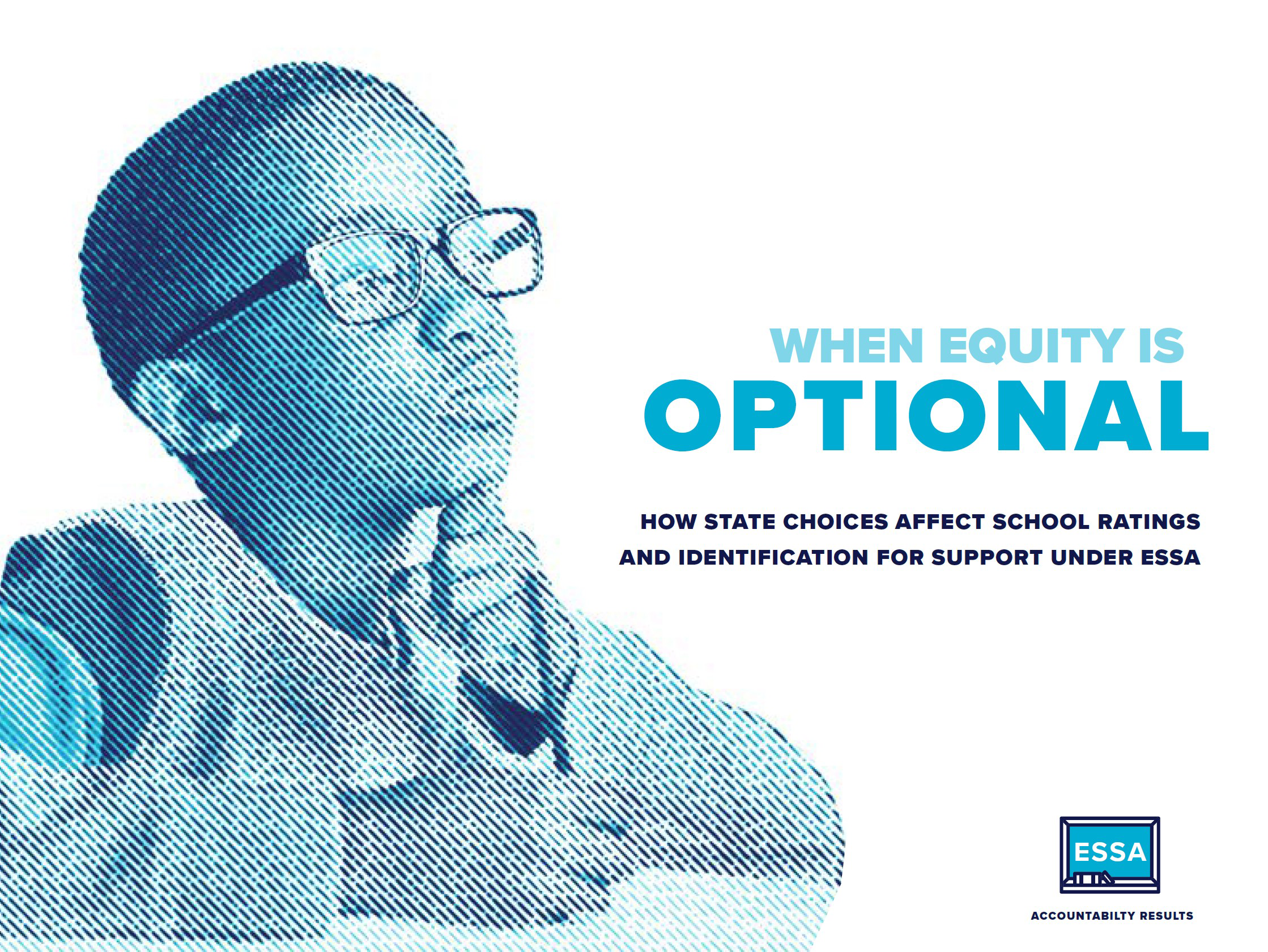
All4Ed’s When Equity Is Optional series, one of the most comprehensive analyses of the Every Student Succeeds Act (ESSA), tells a stark and urgent story. In all ten states studied, Black and Latine students were more likely to attend low-rated schools than white students. In Florida, for example, 22% of all students were Black compared to 63% of students in F schools and only 11% in A schools.
These disparities are not accidents. They are the result of policy choices, or the deliberate failure to make them. ESSA gave states flexibility to design their accountability systems while maintaining equity guardrails meant to protect the most vulnerable students. Too many states used that flexibility to leave low-performing schools, and the Black and brown children in them, behind.
We need school support systems that are honest, funded, and enforceable. We need accountability systems that measure what matters, including disaggregated data that makes the experiences of Black students visible, not averaged away. And we need state leaders who understand that flexibility without equity is not innovation. It is abandonment.
College and Career Pathways: Unequal Social Capital Must End
Too often in this country, access to high-quality college and career guidance is a product of your zip code. If you grow up in a well-resourced district, an attentive counselor walks you through advanced coursework, helps you understand your financial aid options, and introduces you to alumni networks and internship pipelines. If you grow up where most Black young people grow up, where counselors are stretched impossibly thin, serving hundreds of students each, that guidance is either absent or rationed.
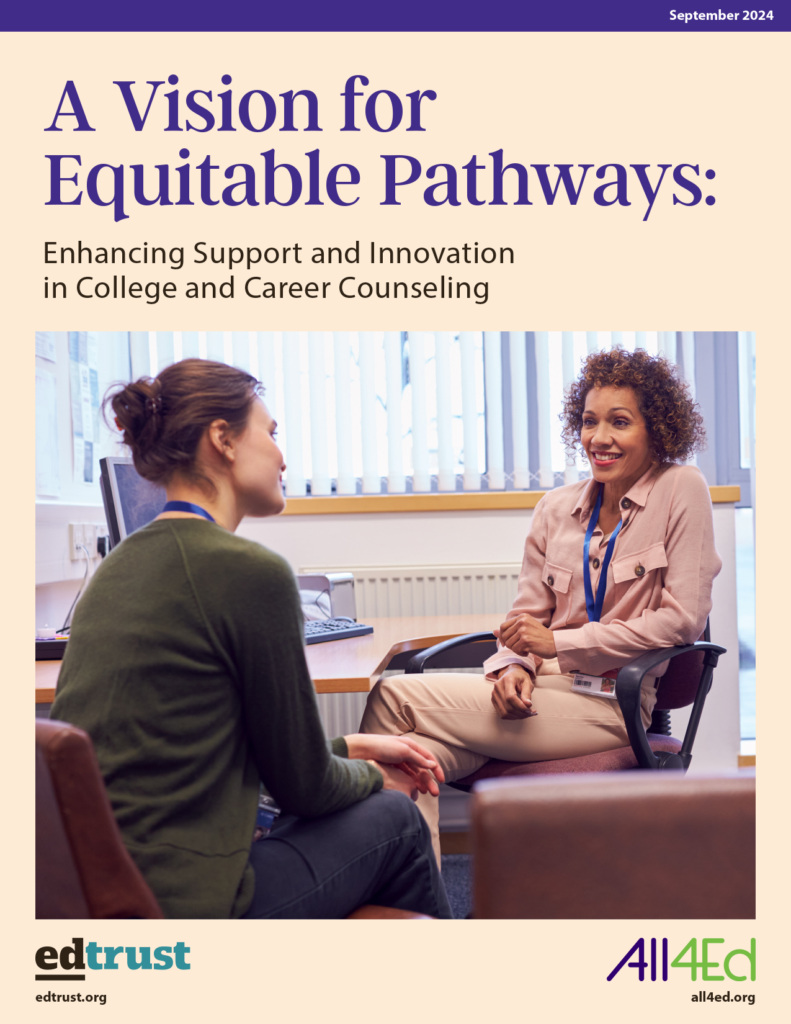
All4Ed’s recent report with EdTrust, A Vision for Equitable Pathways: Enhancing Support and Innovation in College and Career Counseling, calls for a dedicated Pathways Navigator in every high school, someone whose sole job is to provide personalized, individualized college and career guidance. As we wrote in that report: “Too often, high-quality college and career opportunities are shrouded in a word-of-mouth system that excludes many students.” Federal and state leaders must act on this vision. Every student, regardless of their district’s wealth, deserves a guide for the road ahead.
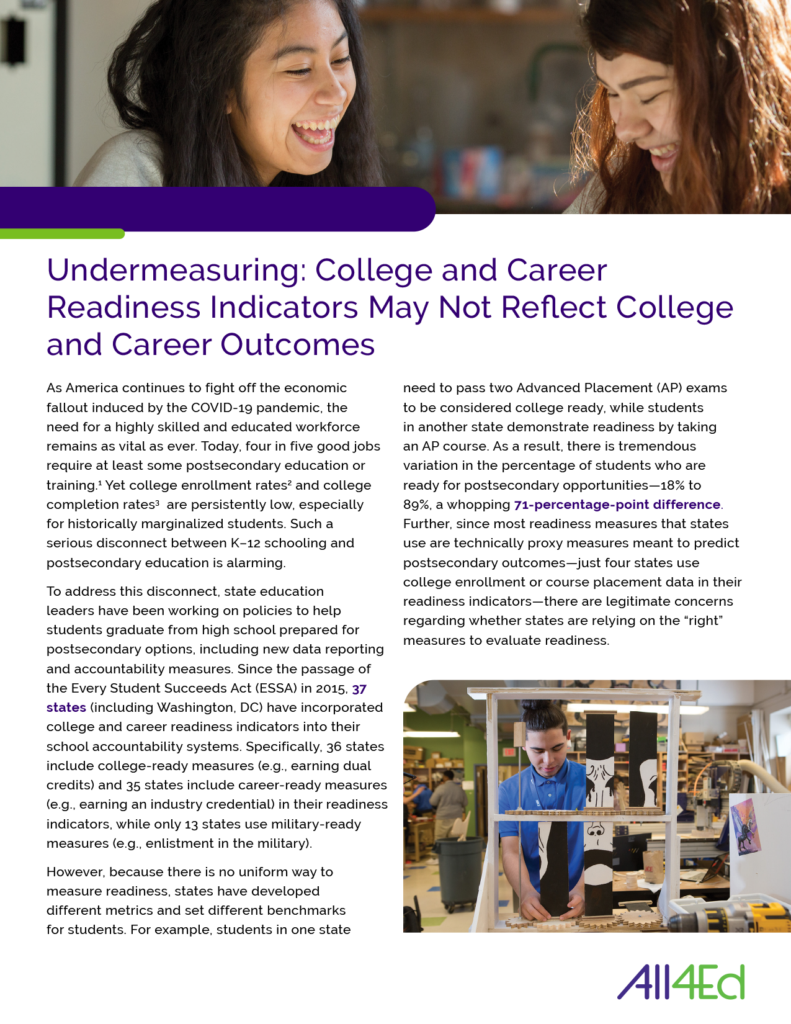
All4Ed’s Undermeasuring report exposed another dimension of this problem: the metrics states use to track college and career readiness often don’t accurately reflect whether students are actually ready. In Ohio, for example, 27% of all students earned remediation-free scores on the ACT or SAT, but only 6% of Black students did. States are measuring, but they are not always measuring the right things, and the consequences fall hardest on students of color.
Digital Equity: Access Is Not Optional
Black students deserve the same digital opportunities as their peers, not as a favor, but as a right. Yet, All4Ed’s research and listening sessions with superintendents across the nation have made clear that policymakers too often focus narrowly on broadband and device access, when the full picture of digital equity is far broader. It encompasses affordability, device repair and replacement, digital literacy, professional development for educators, data privacy, and cybersecurity protections for students.
Before the pandemic, nearly 17 million children lacked access to high-speed internet in their homes, and one in three Black, Latino, and American Indian and Alaska Native families faced that same barrier. Progress has been made, but it has been uneven and fragile. As of 2023, one-third of school districts still did not meet the FCC’s recommended bandwidth standard. And as pandemic-era programs wound down, the percentage of schools offering home internet access dropped from 70%in 2021 to just 45% in 2022.
A student who cannot log on at home cannot complete homework, access college resources, or compete in an economy that increasingly demands digital fluency. Digital equity is not a technical issue. It is a civil rights issue. Policymakers must fund sustainable digital infrastructure, protect students’ privacy online, and ensure that educators have the training they need to make technology a genuine equalizer, not another gap.

Civil Rights: This Is Not a Moment for Silence
Let me be direct: the progress we have made – hard-fought, generationally sustained–is under coordinated and deliberate attack.
The current administration has proposed fully eliminating funding for countless programs. More than 120 TRIO programs have already had their grants canceled under the guise of DEI policy violations, including programs that simply stated they wanted to serve roughly equal numbers of male and female students. Sixty-five graduating seniors at one institution alone were cut off from FAFSA workshops and college application support in the middle of the admissions cycle. These are not abstractions. These are real students, whose futures were disrupted.
The Department of Education is being dismantled through illegal interagency agreements and through executive action – and inaction. As someone whose family relied on Pell Grants to fund my college journey, who attended public schools that were imperfect and underfunded, and still changed my life – I am here to say: the claim that our federal systems are unnecessary is not just wrong. It is dangerous.
Since 1965, the civil rights infrastructure of American education has held because advocates, educators, and policymakers refused to let it fail. That work is not finished. It is urgent.
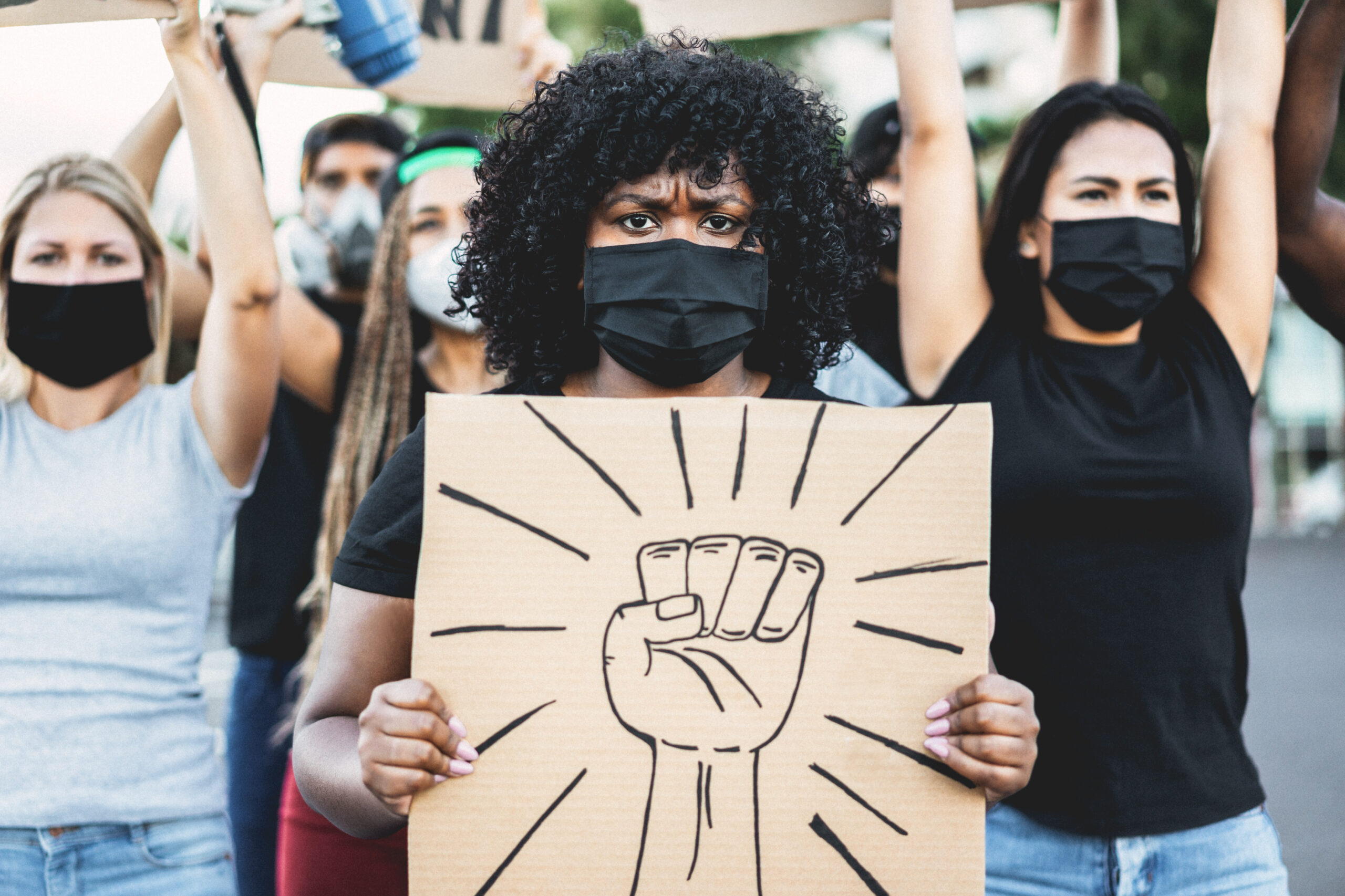
A Rally Cry: Raise Your Voice
To the policymaker sitting in a legislative chamber right now, weighing a vote on education funding: the young people you are deciding for are our legacy. They are the children of immigrants, the children of working families, the first in their families to imagine college. They are America. Vote like their futures depend on it – because they do.
To the educator in a classroom, the counselor navigating impossible caseloads, the administrator fighting for every dollar: you are doing sacred work. Your daily commitment to Black students, to all students, is an act of resistance and love. You are not alone.
To the parent, the neighbor, the community member reading this at home: your voice matters in ways you may not fully see. Show up to school board meetings. Contact your representatives. Support organizations doing this work. Share this story.
All4Ed will continue to advocate, from the classroom to Congress, for the policies and investments that ensure every student in this country has a real shot. We will continue to publish research that makes inequity visible and demands better. We will continue to name what is at stake and who is being harmed when systems fail.
Our legacy is in today’s classrooms. Let’s make sure it has everything it needs to thrive.
Meet The Author
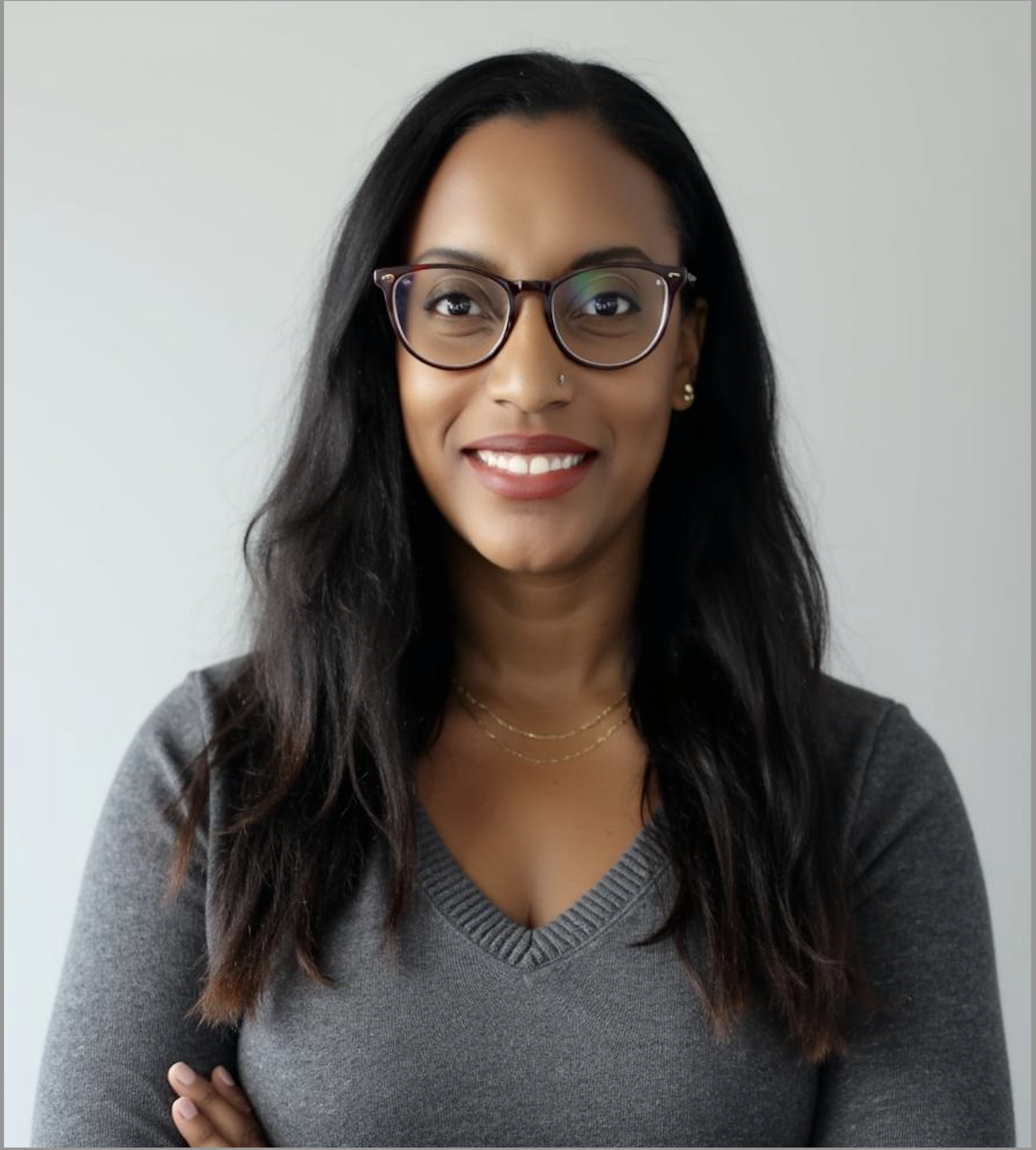
Rebeca Shackleford
Director of Federal Government Relations
