
Building Resilience One Classroom at a Time: How Wilson County Schools Are Helping Students and Adults Thrive
In our first post in this series, “Supporting Every Student: How the NC Center for Resilience & Learning Is Building Safer, More Inclusive Schools,” we introduced how NCCRL works with districts—especially in rural and remote areas—to provide trauma-informed professional learning and long-term coaching so that all students, including those with learning differences, have supportive school environments.
Now we turn to a more intimate portrait of the work in action—at Vinson-Bynum Elementary in Wilson County, North Carolina—through the voices of a parent and the school principal participating in NCCRL’s resilience initiatives.

The North Carolina Center for Resilience & Learning (NCCRL) has partnered with dozens of public school districts—many of them rural and remote—to deliver trauma-informed professional learning and coaching for educators. The goal? To create safer, more supportive schools that champion the whole child and equip teachers with strategies to foster resilience and academic success. In one district, Wilson County, the R&L professional learning model is being implemented with a focus on utilizing trauma-informed and social-emotional learning practices to support students with learning differences and their unique needs and stresses.
At Vinson-Bynum, that mission isn’t abstract—it’s woven into students’ daily experiences, classroom cultures, and how adults in the building interact with one another.
“As my son approached kindergarten, I was aware he had a developmental delay and I wanted to be as present as I could be,” says Jasmine Jones, parent and PTO president. She began serving in the PTO first as treasurer, then as president, to be part of the support system for her own child—and others in the school. When asked what drew her to the NCCRL program, she focuses not on slogans but on concrete shifts she sees in faculty practice:
“One of the things I love most is that the faculty has been trained to adapt to work with our elementary school students. It’s not a one-size-fits-all. They have calm-down corners. They give the students space and time they need, instead of just ‘get over it.’ They give students positive skills to use. Last week the principal led the students through an exercise of taking a deep breath and counting to five that I thought was very helpful and something that they easily do at school or at home if they need to.”
The training provided by R&L to school staff discusses trauma, the research behind Adverse Childhood Experiences (ACEs), the brain science around the stress response system, and introduces resilience-building in schools. One of the primary goals of the training is to build awareness and understanding that behavior is a form of communication.
Jones also underscores a critical point: with 480 students, each arrives carrying unseen challenges.
“We have no idea what these students are facing each morning before they get to school. For some students it’s a matter of saying ‘I need you to take a minute to collect yourself,’ but some students may need multiple reminders. Knowing your student is important so you know how to help him so they can finish their school day despite whatever hiccup may happen.”
She’s seen change over the years: “Even from last year to this year, I see the change and using the new skills they have learned by the teachers from grade to grade is happening. It gives each teacher a head start in knowing how each student responds. This training gives them an arsenal of options to work with each of their students.”
Parent and educator both, Jones hopes these strategies persist: “I definitely feel these trainings can help students when they are young. It’s important to have this continue and be available in middle school. The students feel heard and seen!”
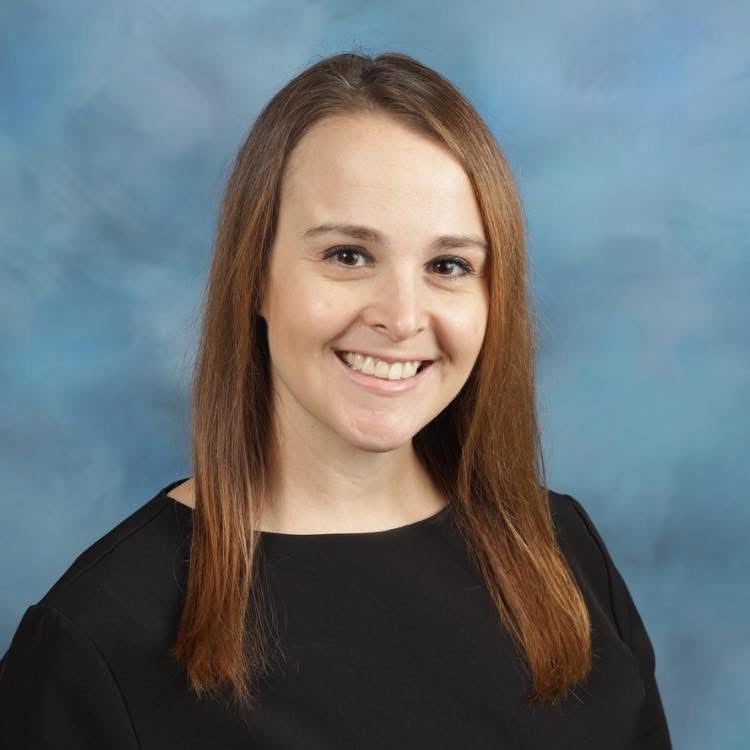
Principal Brittany Dublin brings a whole-school leadership perspective. She first heard about NCCRL when Wilson County began engaging with the “resilience movement” in other schools. When Vinson-Bynum was selected, she says she was “ecstatic.”
“Our students go through a lot of trauma and we need more support – staff, teachers and students. I was ecstatic when we were chosen. Sometimes our students get overlooked. Being told we were going to be a resilience school, I was so happy.”
Her hopes for the training included more awareness, not just of students’ needs, but of how adults interact with each other and model well-being:
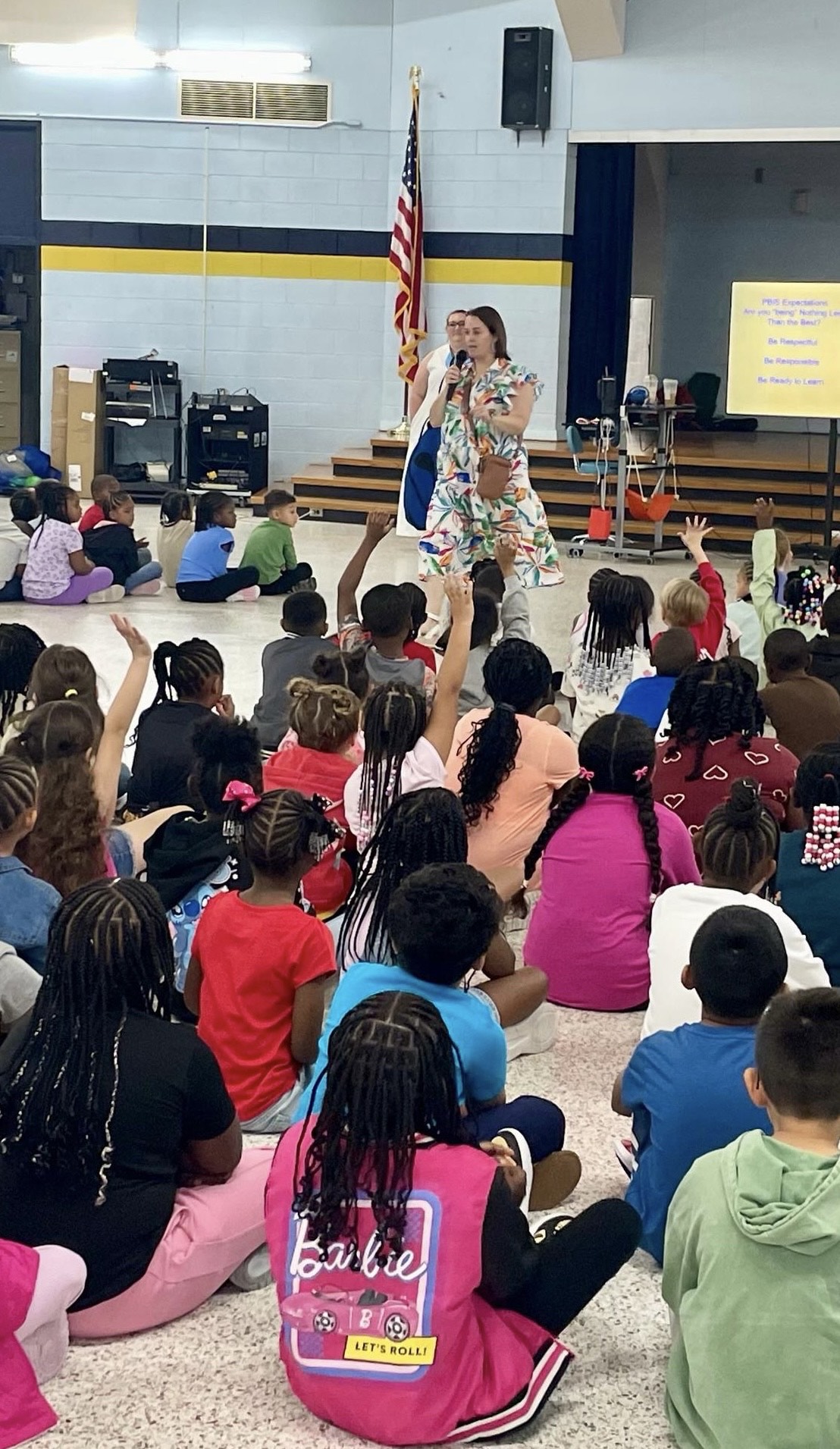
“My hope was that this training would make us more cognizant of our interaction with our students and with each other. We have consistent conversations—how students react to situations and why they do. Every morning we have a mindfulness moment. This week it’s count to five. We embed this practice in staff meetings. To do the work, we need to re-center… we have to practice what we preach, not just for students.”
She notes visible changes in staff engagement and student behavior, crediting the resilience practices:
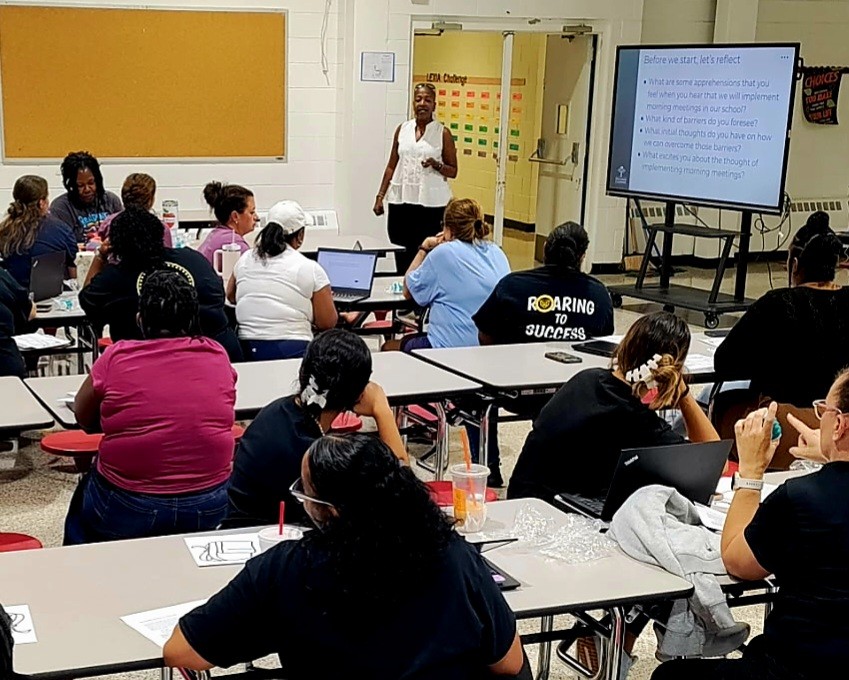
“I personally have seen staff invested in this, and the students are starting to apply what we talk about. Between 8:00 and 8:10 a.m., they have morning meetings. We’ve re-invested in our morning meeting so it includes social-emotional pieces along with academics. We are giving students strategies they can apply outside the school: take a moment, count to five, take a deep breath.”
Dublin speaks of teaching these skills across the K–12 experience.
“Relationships need to be there before instruction can help. I’m a former middle school teacher. I feel what we’re doing is needed at every level. Every child, every adult, needs coping strategies. They’ll also need these skills as adults.”
At Vinson-Bynum Elementary School, the NCCRL approach is not just a program—it’s becoming a culture shift. With leadership, intention, and consistency, staff are learning how to notice, pause, and respond rather than react. The impact is already measurable: office referrals dropped 28 percent last year compared with the year before, and student absences decreased by 10 percent. Parents like Jasmine see it. Principals like Brittany live it. And students are feeling it.
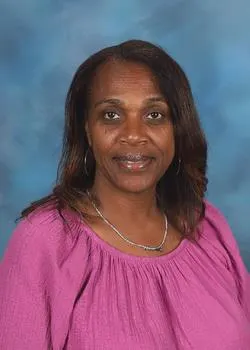
And now, that same resilience-building approach is beginning to take root beyond the elementary level. At Beddingfield High School, educators are bringing trauma-informed practices into classrooms that serve older students—helping them strengthen relationships, build coping skills, and find stability in the midst of life’s challenges. One of those educators is Exceptional Special Education Teacher Tonia Gear, who has seen firsthand how this work can make a difference.
“Now that we are in our second year of the training, we can really start implementing these strategies into the high school,” Gear explains. “What I’ve enjoyed most is being able to collaborate with other teachers and seeing the difference it will make in the school.
For Gear, consistency across classrooms is essential to helping students succeed. “I feel like if everyone isn’t doing the same thing, it won’t work. If I’m a student who goes to one classroom and they don’t allow me time to use a chill-out room or gather myself, but then I go to another class and they do—that inconsistency doesn’t help. If the whole school is doing it, that will make it more effective and students will feel supported.”
She acknowledges that adopting new practices can be challenging, but can make a difference for students, faculty, and parents.
“We haven’t had this type of program before. Like any new policy, some teachers, parents, and students won’t like it, but we have to try it because we don’t know what the outcome will be. Sometimes, change makes a big difference. And I think this will work in our school.
For Gear, who both graduated from and now teaches at Beddingfield, this work is personal.
“I’m most excited about the fact that this will help build relationships between teachers and students. As an Exceptional Children’s Special Education teacher, I know how important those relationships are. This school has given so much to me, and I’m excited to give back.”
Consider one small change in your daily practice that could foster resilience and connection among your students—whether it’s a morning mindfulness moment, a calm-down corner, or simply pausing to listen. Small shifts can lead to lasting impact.
For ideas on trauma-informed strategies you can implement in your classroom, visit our Resources Page — https://resilienceandlearning.org/resources/ for tools, guides, and examples to support your journey.
Let’s keep building stronger schools, one classroom at a time.
The NC Center for Resilience and Learning is a whole school, whole child framework working with districts and schools across the state to create trauma-informed learning environments that are safer and more supportive for ALL students. For more information, visit https://resilienceandlearning.org/
Read the first post in the series:
Read the next post in the series:
