
“Why Don’t We Do This All the Time?”
Asking the Right Questions to Understand a User-Centered Problem
In education, we spend a lot of money, time, and people trying to fix problems. What often gets overlooked is the step before that: stopping to figure out what the real challenge is.
Defining a problem before you try to solve it sounds almost too simple to need saying, but the pull toward action in education is strong. Budgets have deadlines, students’ have urgent needs, and the market is full of tools promising to fix exactly what ails you. Across the rural school districts we coach through the Rural AI Strategy Lab, a collaboration between FullScale and All4Ed, we’ve found that defining the root cause is often the most critical part of the journey, yet it is the one most likely to be bypassed in the rush toward action. Slowing down changes everything that comes after: which solution you choose, where your budget goes, and whether any of it actually works.
Starting with Diagnosis
The Rural AI Strategy Lab brings rural school and district teams together to identify a locally meaningful challenge, understand it deeply, and design small, practical AI-enabled solutions grounded in the experiences of the people they are trying to support. In the first two phases of the Strategy Lab, we ask teams to resist the temptation to begin with an AI tool. Instead, they conduct discovery research: reviewing existing data, engaging stakeholders through activities like empathy interviews, and conducting a root cause analysis to identify patterns and themes–moving from a broad challenge to a specific, user-centered problem.

Consider the approach of a good doctor. When you arrive feeling exhausted and depleted, they don’t immediately provide a stack of prescriptions. Instead, they begin with an inquiry: Is it your rest, your nutrition, your circulation, or perhaps a hereditary factor? They identify the root cause before attempting a treatment.
Schools rarely have the luxury of moving that slowly. A diagnostic screen shows students are weak in phonics, and there is real pressure to respond right away. So the system reaches for a phonics program because students need support now.
What often gets crowded out are the “doctor questions.” Why are students weak in phonics? What are teachers seeing in the classroom? What support do they need and when do they need it? How does the curriculum, schedule, training, data, or ongoing coaching impact learning?
“Students are weak in phonics” may be where a team starts, but it does not yet tell us who specifically is struggling, what they are experiencing, or what is getting in the way. To dig deeper, teams must first understand what is happening in practice. That means looking at data, listening to the people closest to the work, and identifying themes across what they hear and see. Through discovery research, they may learn that one contributing factor is that teachers are struggling to provide consistent, explicit phonics instruction.
Digging Deeper: Generating a User-Centered Problem
But peeling back the layers does not stop there. To really get at the root cause, our Strategy Lab teams use a protocol called the 5 Whys; a structured process to consider: Why is this happening? (Teachers are not always sure which phonics skills students need next). Why is this happening? (Student data is not easy to interpret or translate into next-step instruction). Why is this happening? (Teachers do not have accessible, just-in-time support when they are planning or responding to student needs).
Keep going, and you land on a user-centered problem: teachers are struggling to provide consistent, explicit phonics instruction because they do not have accessible, just-in-time support to interpret student data and connect it to next-step instruction within the constraints of the school day.

Here is the part that matters: once you name the root cause, you can point your solution straight at it, instead of spending money, hours, and manpower across every symptom at once. It is how a district avoids procuring three literacy programs with countless unused logins, still unsure if it’s working. Find the root, and you get something critical in school improvement: focus.
The Power of Human Centered Design

For many Rural AI Strategy Lab teams, this was the moment the work changed. They entered the process with problems they cared deeply about and, in many cases, had been working on for years. But as they moved through the first two phases, listened closely to educators and students through empathy interviews, named themes, and kept asking why, the problem began to look different. One team member described the experience by saying, “It sort of hits you a little bit.”
That is what root cause analysis can do when it is grounded in human-centered design. It does not just make a problem more precise; it changes how a team sees the problem, who they see inside it, and what kind of solution becomes possible.
Another team member reflected that “empathy interviews were one of the best learning opportunities since I started this role.” Empathy interviews are not solely a data collection
strategy. They are a way to interrupt assumptions, helping teams hear what others are actually experiencing, not just what adults think is missing. It is no longer only about abstract systems, gaps, or test scores. It is about the lived experience of a teacher trying to differentiate with too little time, a student trying to navigate options that do not feel visible, or a family trying to understand how to support learning from outside the school building.
This is the work our teams have been doing, and it is harder than it sounds. One leader asked us, “Why don’t we do this all the time?” That question deserves an honest answer.
The Value of Getting Specific
Defining a user-centered problem is not technically difficult, but it is specific. It centers a real teacher, student, family, or school leader. It describes what that person is experiencing, not just what they are missing.
What it costs is time, discipline, and the right people in a room asking the sometimes uncomfortable questions. It also requires resisting one of the strongest pressures in education and in AI adoption right now: starting with technology as the solution.
So before your next tool gets approved, sit with your team and ask one question: whose experiences are we trying to change, and what are they going through right now?
If you cannot answer in plain, specific terms, you are not behind. You are standing exactly where the real work begins.
Learn More

Rural AI Strategy Lab
The Rural AI Strategy Lab brings together 13 rural school districts in a six-month learning network to research, pilot, and share practical and equitable uses of AI in rural education.
AI in Rural Schools: What We’re Seeing in Practice
AI in Rural Schools: What We’re Seeing in Practice highlights how rural schools and districts are using AI to expand student opportunities, increase educator capacity, and prepare learners for future careers, while emphasizing that successful implementation depends on strong local relationships, coherent leadership, and support systems tailored to rural contexts.
Listening to Rural Educators: Early Insights from the Rural AI Strategy Lab
This blog shares early insights from rural educators participating in the Rural AI Strategy Lab, revealing strong interest in AI as a tool to expand career pathways, support diverse learners, and personalize learning, while emphasizing that implementation must reflect the unique needs, values, and realities of rural communities.
Meet The Authors
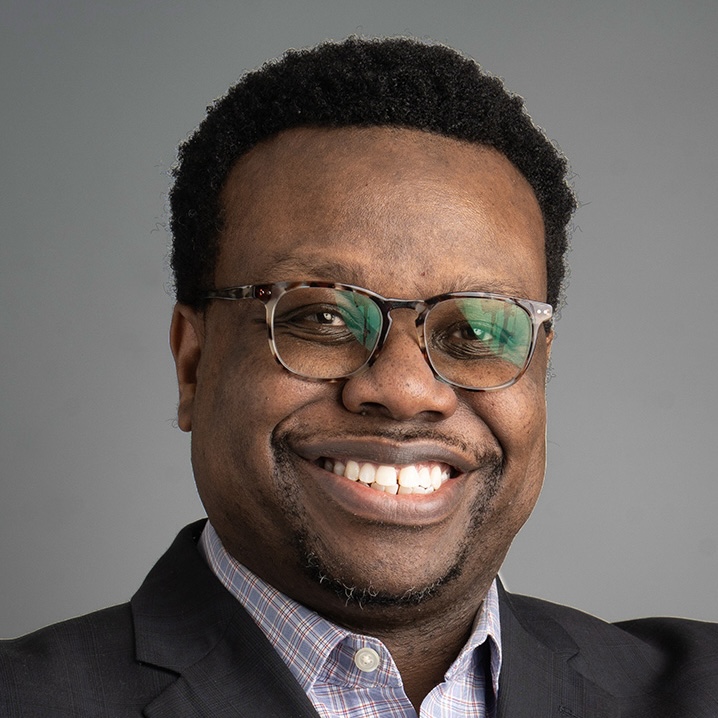
Dr. Adam Phyall III
Dr. Adam Phyall III is an educator, edtech leader, and innovation advocate who helps school and district leaders design future-ready learning experiences for all students. As Director of Professional Learning and Leadership for Future Ready Schools, he supports educators through national professional learning, facilitation, and thought leadership focused on transforming teaching and learning through best practices.

Dr. Megan Benay
Dr. Megan Benay is a Partner on the Practice and Implementation team at FullScale. She is a strategic and innovative educational leader with extensive experience in data-driven student-centered learning initiatives. Dr. Benay is passionate about using research, collaboration, and emerging technologies to create more inclusive learning environments that advance equity in K-12 education.
