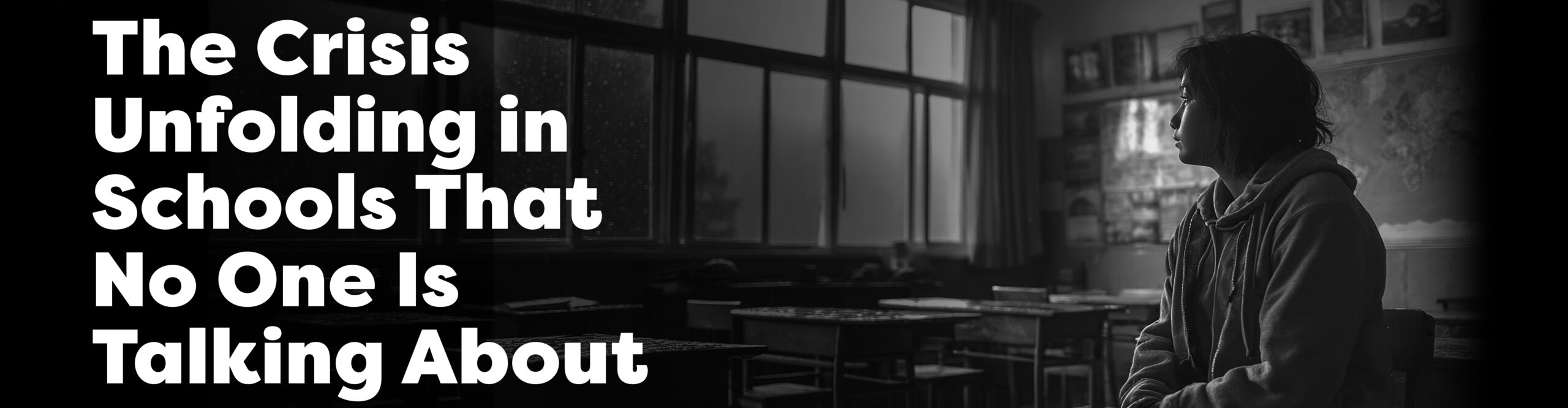
The Crisis Unfolding in Schools That No One Is Talking About
Immigration enforcement and anti-immigrant rhetoric have once again been thrust into the center of public debate.
But while headlines focus on an increase in Immigration and Customs (ICE) raids, a quieter, more insidious development is unfolding in schoolhouses across the country.
Every child, regardless of immigration status, has the right to a free public education, as affirmed in Plyler. For over four decades, courts across the country have reaffirmed the decision and, within it, the right of all children to a free, public education.
But a push by the Heritage Foundation, the architect of Project 2025 and many of the harms faced by immigrant communities today, would undermine both Plyler’s precedent and our commitment to building a public education system that equalizes opportunity for all. The organization’s 2026 Blueprint encourages lawmakers to undermine the critical decision and, more importantly, erode children’s rights.
At first glance, the model legislation put forward by the Heritage Foundation appears to target undocumented students alone. In practice, it actually threatens the educational stability of countless children, including youth in foster care, students experiencing homelessness, and others whose lives already sit at the margins.
When access to school is conditioned on documentation, it is never only one group that feels the never-ending consequences; it’s every student.
Anyone who has spent time in schools knows this reality well. Records get lost when families suddenly move. Birth certificates sit in filing cabinets in another state. A foster youth may move placements three times in a semester and arrive at a new school with little more than a backpack. A student affected by a wildfire, hurricane, or tornado may lose their home and the paperwork therein. Military families transfer from base to base, often across countries, sometimes mid-school year. In these moments, schools have long served as the sole place of stability; it’s their doors that open first and sort out the paperwork later.
Every child should have the opportunity to reach their full potential, and the foundation for that opportunity is education. For decades, Plyler has protected this belief. But the right of children to access public education should not be up for debate.
If Plyler were reversed, states without explicit statutory safeguards could move quickly to restrict access; indeed, some are already positioning themselves to do so. Yet the reality is even more troubling; Plyler doesn’t need to be overturned to destroy what it protects.
Right now, immigration enforcement is showing up in and near schools. Parents are being detained on the way to drop off. Families are keeping children home out of fear. Kids are disappearing from classrooms, not because the law changed, but because the climate of terror is doing the work that Heritage and others hope the courts will do.
This matters because a child who is afraid cannot learn. Research is unambiguous that chronic absenteeism, trauma, and acute stress impair cognitive development, academic achievement, and long-term outcomes. When Plyler protections erode, the harm does not stop at the child who is excluded or deterred. It ripples through every classroom those children are missing from, affecting teachers, disrupting instruction, and diminishing the educational experience of every student in the room.
Moments like these expose something deeper than legal vulnerability; they reveal how siloed our policymaking has become. Immigration policy, education policy, and child welfare policy are often debated in isolation, as though they affect entirely different populations. But children do not live in policy silos; they live at the intersection of these policies.
When immigration enforcement intensifies, it affects school attendance. When documentation requirements change, it affects enrollment. And when educational access becomes uncertain, the children most affected are often those already navigating instability.
And finally, when protections for one group of students are threatened, the effects rarely remain contained. They impact an entire education system, impacting other vulnerable children as well. And when we destabilize protections for one group of students, we destabilize them for all.
This is exactly the danger SCOTUS confronted when it decided Plyler decades ago. The Court recognized the broader societal harm: allowing states to exclude some children from school would not remain a narrow policy decision; it would erode the fundamental belief that public education must be available to all. Writing for the Majority, Justice William J. Brennan wrote words that still resonate today: education is perhaps the most important function of state and local government, and where a state provides it, it must be made available to all on equal terms.
If this conversation resonates with you, stay engaged and let us know what other student groups might be affected. Learn about the protections established in Plyler v. Doe, follow the policies being debated in your state, and speak up when proposals threaten to erode access to education.